
Sell More Without Buying More Inventory: The Power of Creator-Connected Dropshipping

How Fashion Retailers Can Expand Product Selection, Follow Consumer Trends, and Grow Online Sales
For fashion retailers, choosing the right products is essential. But buying inventory before knowing what customers will purchase can be expensive.
A trending handbag, new clothing collection, or popular accessory may attract attention, yet ordering large quantities creates financial risk.
Today, dropshipping offers retailers another way to expand their product selection without purchasing every item upfront.
And as creator-driven shopping grows, combining product discovery with flexible inventory can create new opportunities.
More products. Less upfront inventory. More ways to sell.
1. Why Inventory Flexibility Matters

Traditional wholesale purchasing requires retailers to invest in products before making sales.
When merchandise sells quickly, that investment can pay off. But slow-moving inventory ties up cash and occupies valuable storage space.
According to Shopify's guide to selling without inventory, dropshipping allows retailers to offer products without purchasing or storing them in advance.
Instead, suppliers maintain inventory and fulfill customer orders.
For retailers, this can reduce upfront inventory commitments while allowing businesses to explore additional products and categories.
The opportunity is to expand your selection without taking every traditional inventory risk.
2. Discover Products Through Creator Trends

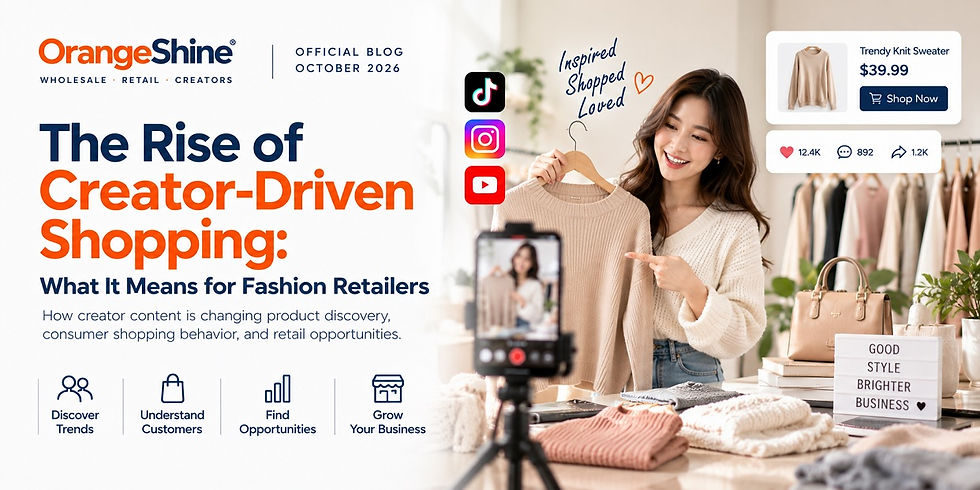
TikTok, Instagram, and YouTube have become important sources of fashion inspiration.
Creators introduce clothing, handbags, accessories, and beauty products through styling videos, demonstrations, and reviews.
For retailers, these videos can provide insights into what consumers are discovering.
Imagine a fashion creator featuring an oversized cardigan that attracts significant interest.
A boutique owner may recognize an opportunity to offer similar styles.
Instead of immediately purchasing large quantities, the retailer could explore supplier-fulfilled products to test customer demand.
Creator content helps identify opportunities. Dropshipping provides flexibility to explore them.
Not every trending product will sell successfully, so customer preferences and product quality remain important.
3. Expand Your Store Beyond Existing Inventory
Dropshipping can help retailers offer complementary products without stocking every item.
For example:

Clothing: Add seasonal collections and trending styles.
Handbags: Introduce new designs and accessories.
Jewelry: Expand into complementary fashion items.
K-Beauty: Explore skincare and beauty categories.
Home Décor: Offer lifestyle products beyond apparel.
Shopify Collective uses a similar supplier-connected approach, allowing retailers to add participating brands' products to their stores while suppliers handle fulfillment.
For independent retailers, this model can make product expansion more manageable.
However, supplier reliability, shipping costs, product availability, and profit margins still require careful evaluation.
4. From Product Discovery to Retail Sales
Discovering trending products is only the beginning.
Retailers also need a convenient way for consumers to shop.
Imagine a customer discovering a handbag through an Instagram video.
The customer becomes interested and searches for similar products online.
A retailer offering relevant merchandise through a dropship store can provide a purchasing option without necessarily holding that inventory.
The process becomes:
Creator Content → Product Interest → Product Selection → Online Store → Potential Sale

Creator content can generate interest, while a retail store provides a place to purchase.
This connection creates opportunities for retailers to respond to changing consumer preferences.
5. Start Small. Test. Expand.
Dropshipping doesn't eliminate every business risk, but it can make testing new products more flexible.
Retailers can begin with a focused product selection, evaluate customer response, and adjust their offerings.
Consider product views, customer inquiries, conversion rates, shipping performance, and profit margins.
Products that perform well may justify additional promotion or traditional wholesale inventory purchases.
The goal is to make better buying decisions while keeping your business flexible.
6. A New Opportunity Through OrangeShine

OrangeShine connects wholesale suppliers, retailers, and creators through one commerce network.
Its Wholesale Marketplace provides access to products from participating vendors.
The Retail Marketplace offers free dropship web stores, allowing eligible retailers to sell supplier-fulfilled products without purchasing inventory upfront.
With the October 2026 introduction of OrangeShine Creator Marketplace, brands can collaborate with creators to introduce products to consumer audiences.
Together, these marketplaces bring product sourcing, creator-driven discovery, and retail selling opportunities closer together.
For retailers, the opportunity is to expand product selection while exploring new ways to reach customers.
More Products. More Possibilities.

The future of retail isn't simply about carrying more inventory.
It's about offering the right products, understanding consumer interests, and creating convenient shopping experiences.
Discover new products. Expand your selection. Grow your retail opportunities.
Explore OrangeShine Retail Marketplace

Discover how OrangeShine helps retailers expand online selling through connected suppliers and dropship stores.

Industry References
Shopify, How To Start an Online Store Without Inventory, June 2025.
Shopify, Dropshipping on Shopify: Complete 2026 Beginner's Guide, June 2026.
Faire, What's Trending: Stock Your Shelves With Insights From Faire, June 2025.


Comments